
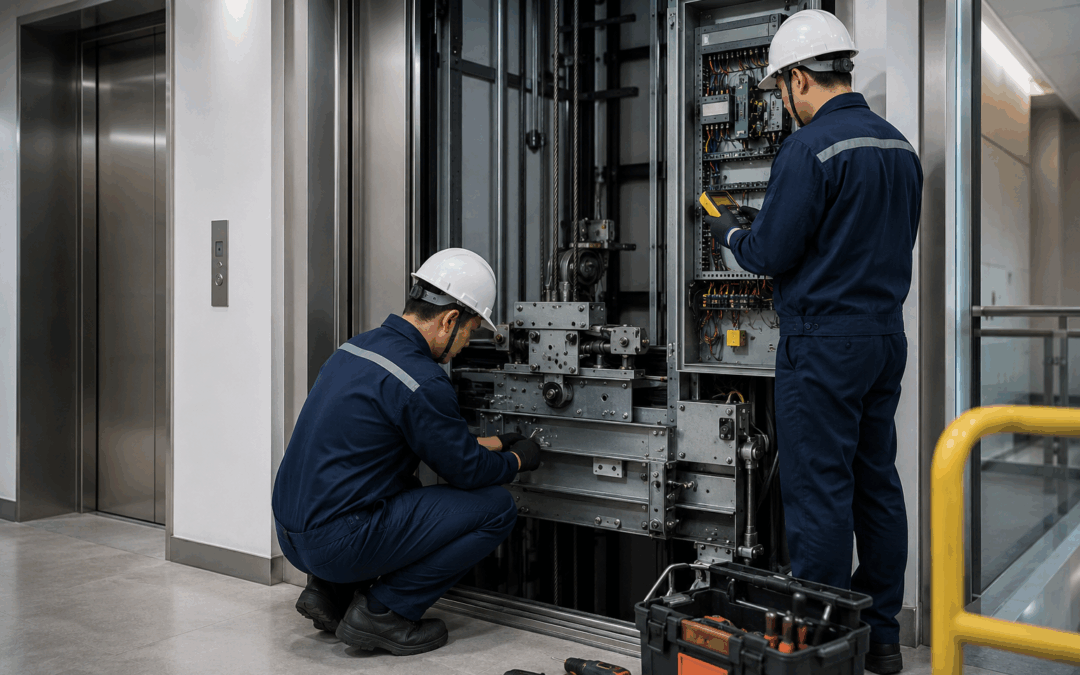
Elevators are an essential part of modern residential towers, offices, hotels, hospitals, shopping centres and industrial buildings. They transport passengers and goods between floors throughout the day, making their safety and reliability a major responsibility for building owners and facility managers.
Like any mechanical and electrical system, an elevator experiences wear during daily operation. Door components move repeatedly, control systems process thousands of commands, cables remain under continuous tension and motors operate under varying loads. Without regular elevator repair and maintenance, small problems can develop into breakdowns, safety concerns and expensive equipment damage.
A professional maintenance plan helps keep the elevator safe, comfortable and dependable while reducing unexpected interruptions.
What Is the Difference Between Elevator Maintenance and Repair?
Elevator maintenance and elevator repair are closely connected, but they serve different purposes.
Elevator maintenance is a preventive process. It includes regular inspections, cleaning, lubrication, adjustments, testing and monitoring of important components. Its purpose is to identify wear or developing faults before they interrupt elevator operation.
Elevator repair is corrective work carried out when a component becomes damaged, unreliable or unable to operate properly. This may include repairing or replacing door operators, sensors, control boards, motors, brakes, buttons, cables and other elevator parts.
Regular maintenance reduces the need for major emergency repairs. However, when a problem is detected, timely repair is necessary to prevent further damage and restore safe operation.
1. Protects Passenger Safety
Passenger safety is the most important reason to maintain an elevator regularly.
An elevator contains several safety systems that must work together correctly. These include door interlocks, brakes, overspeed governors, emergency alarms, communication systems, sensors and backup power arrangements.
During scheduled maintenance, trained technicians inspect and test these components. They can identify worn parts, loose electrical connections, unusual movement or incorrect system responses before the issue becomes more serious.
International elevator safety standards cover the operation, inspection, testing, maintenance, alteration and repair of elevator systems, demonstrating how closely proper servicing is connected to passenger safety.
Regular professional attention helps protect residents, visitors, employees and service personnel who depend on the elevator every day.
2. Prevents Unexpected Elevator Breakdowns
An elevator rarely stops working without showing earlier warning signs.
Unusual noises, slow doors, inconsistent floor levelling, delayed movement and repeated error messages may indicate that a component is wearing out. If these symptoms are ignored, the elevator may eventually shut down completely.
Preventive maintenance allows technicians to identify these warning signs early. Minor adjustments or part replacements can then be completed before they cause a major failure.
This is particularly important in high-traffic buildings such as:
- Residential towers
- Hotels and resorts
- Hospitals and clinics
- Shopping malls
- Office buildings
- Warehouses and industrial facilities
An unexpected breakdown in these properties can inconvenience many users and disrupt normal building operations.
3. Improves Elevator Performance
A properly maintained elevator provides a smoother and more comfortable passenger experience.
Regular servicing helps improve:
- Door opening and closing
- Acceleration and deceleration
- Floor levelling accuracy
- Ride comfort
- Control system response
- Button and display operation
- Noise and vibration levels
Passengers may quickly lose confidence in an elevator that moves roughly, produces unusual noises or does not stop correctly at floor level.
Regular adjustment and servicing help maintain smooth movement and accurate stopping. This improves both elevator performance and the overall impression of the building.
4. Reduces Long-Term Repair Costs
Ignoring small elevator faults can lead to larger and more expensive problems.
For example, an incorrectly adjusted door may place additional strain on the door operator. Poor lubrication may increase friction and wear on moving components. An unstable electrical connection may damage sensitive control equipment.
A scheduled maintenance visit can identify these conditions before they affect other parts of the elevator.
Repairing a small component early is generally more manageable than replacing multiple damaged parts after a complete system failure. Preventive maintenance also makes maintenance costs more predictable for building owners.
5. Extends the Elevator’s Operational Life
Elevators are significant investments that are expected to serve a building for many years.
However, their useful life depends heavily on how well they are maintained. Components that are regularly cleaned, lubricated, adjusted and tested are less likely to experience premature wear.
A professional maintenance programme helps reduce excessive pressure on:
- Motors
- Bearings
- Guide rails
- Door mechanisms
- Control systems
- Suspension components
- Hydraulic systems
- Braking equipment
Regular maintenance does not mean that an elevator will never require modernization. Technology, building requirements and safety expectations will continue to change. However, good maintenance can keep the existing system reliable and help building owners plan future upgrades more effectively.
6. Supports Compliance With Safety Requirements
Elevators must be operated and maintained according to applicable safety standards, inspection requirements and local building regulations.
Maintenance records can demonstrate that the elevator has received regular professional attention. These records may include inspection dates, faults identified, parts replaced, repairs completed and safety tests performed.
Working with a qualified elevator maintenance company helps building owners maintain proper documentation and prepare for inspections.
However, routine maintenance should not be treated as a replacement for required third-party inspections or certifications. Building owners should ensure that both maintenance and regulatory inspection requirements are completed according to the applicable UAE authority and building classification.
7. Reduces Building Downtime
Elevator downtime can create serious challenges, especially in buildings where elevators are the primary means of vertical transportation.
A non-operational elevator can affect:
- Elderly residents
- People with limited mobility
- Hotel guests
- Hospital patients
- Office employees
- Delivery personnel
- Building maintenance teams
In buildings with only one elevator, a breakdown can create an even greater disruption.
Regular maintenance reduces the possibility of sudden failures and helps technicians plan repairs in advance. Planned work can often be scheduled during quieter periods, reducing inconvenience to building occupants.
8. Helps Identify When Modernization Is Required
Maintenance technicians can also help building owners understand when an ageing elevator needs more than routine repairs.
Frequent breakdowns, obsolete control systems, unavailable spare parts, high energy consumption and declining ride quality may indicate that modernization should be considered.
Elevator modernization can include upgrades to:
- Control panels
- Door operators
- Motors and drives
- Safety devices
- Fixtures and displays
- Communication systems
- Cabin interiors
Regular servicing provides valuable information about the condition of the system, helping owners make informed decisions instead of waiting for a major failure.
Common Signs Your Elevator Needs Repair
Building owners and facility managers should arrange an inspection when they notice any of the following signs:
Unusual noises
Grinding, scraping, knocking or repeated clicking sounds may indicate worn or loose mechanical components.
Slow or irregular doors
Doors that open slowly, close forcefully or reopen repeatedly may have sensor, track or operator issues.
Incorrect floor levelling
The elevator car should stop accurately in line with the landing floor. A noticeable height difference should be reported promptly.
Excessive vibration
Strong vibration or shaking may indicate issues involving guide components, rollers, alignment or drive equipment.
Delayed response
A delay after pressing a floor button may point to control, electrical or mechanical problems.
Frequent shutdowns
Repeated service interruptions usually indicate an unresolved fault that requires a detailed professional diagnosis.
Faulty buttons or displays
Damaged buttons, incorrect floor displays or non-functioning indicators can affect accessibility and passenger confidence.
An elevator displaying any unusual behaviour should be inspected by a qualified technician. Building staff should not attempt to open equipment panels or complete technical repairs themselves.
What Should Regular Elevator Maintenance Include?
The exact service requirements depend on the elevator type, age, usage level, environment and manufacturer recommendations. A professional maintenance visit may include:
- Inspecting the machine room or equipment area
- Checking the motor, drive and control panel
- Testing brakes and safety mechanisms
- Inspecting doors, tracks, rollers and interlocks
- Checking buttons, displays and indicators
- Testing alarm and emergency communication systems
- Checking floor levelling accuracy
- Inspecting cables, belts or hydraulic components
- Lubricating relevant moving parts
- Cleaning equipment areas
- Reviewing fault codes and system history
- Recording findings and recommended repairs
A structured checklist helps ensure that important mechanical, electrical and safety components are not overlooked.
How Often Should an Elevator Be Maintained?
There is no single maintenance schedule suitable for every elevator.
Service frequency depends on factors such as:
- Number of daily trips
- Building type
- Elevator age
- Equipment condition
- Manufacturer requirements
- Environmental conditions
- Previous repair history
- Local inspection and safety requirements
A heavily used elevator in a hotel, hospital or commercial tower may require more attention than a lightly used lift in a small private property.
A professional elevator company should assess the system and recommend a maintenance schedule based on its actual condition and usage.
Why Choose a Professional Elevator Maintenance Company?
Elevators should only be serviced by trained and experienced professionals.
A reliable elevator maintenance provider should offer:
- Qualified technicians
- Preventive maintenance programmes
- Fast breakdown support
- Genuine or compatible spare parts
- Detailed service reports
- Safety system testing
- Transparent repair recommendations
- Support for different elevator brands
- Modernization solutions when required
Royal Fuji Star provides elevator installation, repair, maintenance, modernization, spare parts supply and Annual Maintenance Contract services across the UAE. Its service offering covers residential, commercial and specialised vertical transportation requirements.
Benefits of an Elevator Annual Maintenance Contract
An Annual Maintenance Contract, commonly known as an elevator AMC, provides planned service support throughout the contract period.
Depending on the selected package, an AMC may include:
- Scheduled preventive maintenance
- Routine safety checks
- Breakdown assistance
- Technical inspections
- Service documentation
- Minor adjustments
- Spare part support
- Repair recommendations
An AMC helps building owners avoid irregular servicing and provides a clear maintenance arrangement for the elevator.
The contract should clearly mention the service frequency, response time, included parts, excluded parts, emergency support and payment terms.
Conclusion
Regular elevator repair and maintenance are essential for maintaining passenger safety, reliable performance and smooth building operations.
Preventive servicing helps detect faults early, reduce unexpected breakdowns, improve ride quality, manage repair costs and extend equipment life. Timely repairs also prevent damaged components from affecting other parts of the elevator system.
Building owners should not wait for an elevator to stop working before arranging professional service. A planned maintenance programme provides better protection for the equipment, the property and everyone who uses the elevator.
Looking for Reliable Elevator Repair and Maintenance in the UAE?
Royal Fuji Star offers professional elevator repair, preventive maintenance, modernization, spare parts and AMC solutions for residential and commercial buildings across the UAE.
Contact Royal Fuji Star to arrange an elevator inspection or discuss a suitable maintenance plan for your property.
Phone: +971 50 651 54 93
Email: info@royalfujistar.com
Website: royalfujistar.com