
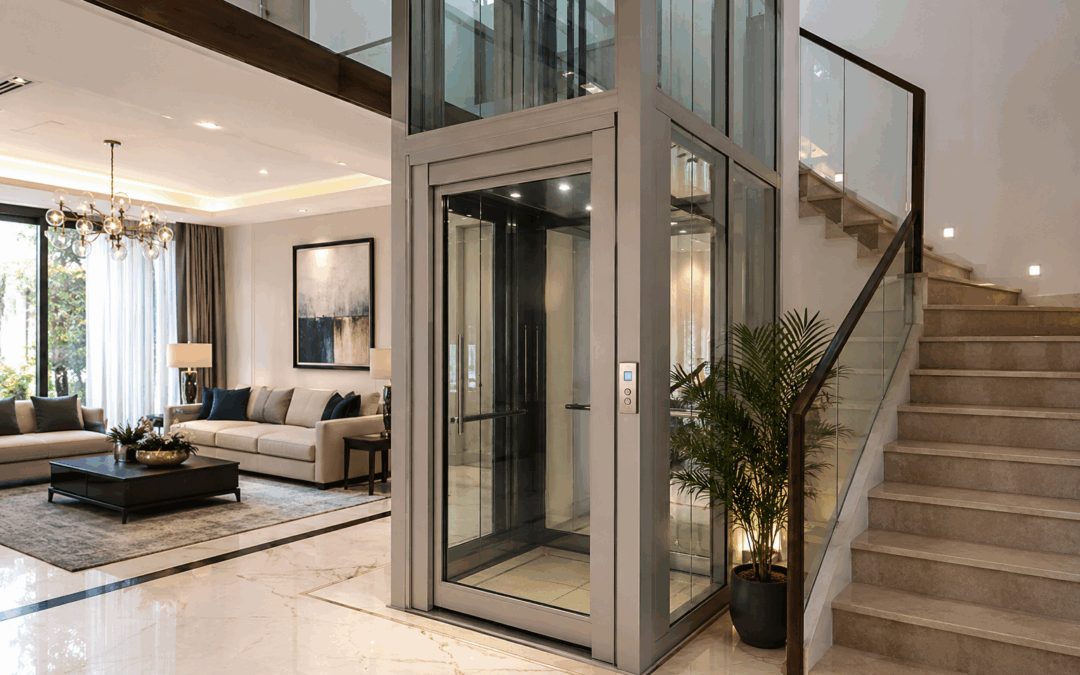
Installing home elevators is no longer limited to newly constructed luxury properties. Many homeowners across Dubai, Abu Dhabi, Sharjah and other parts of the UAE are now adding elevators to existing villas to improve accessibility, comfort and long-term convenience.
A properly planned home elevator can make it easier for elderly family members, people with mobility challenges and children to move safely between floors. It can also help homeowners transport groceries, luggage, furniture and household items without repeatedly using the stairs.
However, installing an elevator in an existing villa requires careful planning. The available space, structural condition, number of floors, elevator technology, approvals and safety features must all be evaluated before the project begins.
This guide explains everything you need to know about installing home elevators in UAE villas, including space requirements, installation stages, expected costs and essential safety considerations.
Can Home Elevators Be Installed in Existing Villas?
Yes, home elevators can usually be installed in existing villas. The villa does not necessarily need to have been designed with an elevator shaft during its original construction.
Modern residential elevator systems are available in compact configurations that can reduce the need for a deep pit, large machine room or major structural modification. Royal Fuji Star provides home lift solutions for both new properties and existing homes, subject to a professional site assessment.
The best installation method depends on:
- The villa’s structural design
- The number of floors and required stops
- Available indoor or outdoor space
- Floor-to-floor height
- Required load capacity
- Accessibility needs
- Electrical and civil work requirements
- The preferred elevator design and finish
Before selecting a model, an elevator specialist should inspect the property and identify the safest and most practical installation location.
Why Install a Home Elevator in an Existing Villa?
Improved Accessibility
A home elevator allows elderly residents and people with limited mobility to access different floors without relying on stairs. It can help family members remain independent and comfortable in their own homes.
Greater Everyday Convenience
Moving groceries, luggage, laundry, baby equipment and household items between floors becomes much easier with a residential elevator.
Future-Proofing the Villa
Installing an elevator can prepare the property for changing mobility requirements. Homeowners may not need an elevator today, but it can become highly valuable as family members grow older.
Enhanced Property Appeal
A professionally installed villa elevator may make a multi-storey property more attractive to buyers who prioritise accessibility, convenience and modern home features.
Better Use of Every Floor
Some families avoid upper floors when climbing stairs becomes difficult. A home elevator makes bedrooms, terraces, entertainment areas and other upper-level spaces easier to access.
How Much Space Is Required for a Home Elevator?
Space requirements vary according to the elevator model, cabin size, load capacity, door configuration and drive system.
Some compact home lift systems can fit within a footprint of approximately one metre by one metre. However, this is model-specific and should not be treated as a standard measurement for every residential elevator.
The final space calculation must include:
- Cabin dimensions
- Lift structure or shaft
- Door opening space
- Required clearances
- Pit depth, where applicable
- Headroom above the top landing
- Electrical and control equipment
- Safe access for maintenance technicians
A slightly larger elevator may be required when the lift must accommodate a wheelchair, caregiver or multiple passengers.
Suitable Locations for Villa Elevator Installation
Inside the Staircase Void
Some villas have an open area in the centre of the staircase. This can be an efficient location because it connects the required floors without occupying a separate room.
The staircase structure and available clearances must be assessed carefully before installation.
Beside the Staircase
The elevator may be positioned next to the existing staircase when there is sufficient floor space and the proposed shaft does not block access or movement.
In an Unused Room or Storage Area
A vertically aligned storage room, closet or unused section on each floor may be converted into an elevator location.
This option depends on the villa’s structural layout and whether the required floor openings can be created safely.
In a Courtyard or Lightwell
An internal courtyard or lightwell may provide sufficient vertical space for a compact lift structure. Ventilation, waterproofing and landing access must be considered during the design stage.
Outside the Villa
When there is limited indoor space, an external elevator structure may be installed alongside the villa.
An external glass or enclosed shaft can connect to each floor through newly created landing entrances. The structure must be designed for UAE weather conditions, including heat, dust, humidity and occasional rain.
Choosing the Right Type of Home Elevator
Different elevator technologies have different structural, space and maintenance requirements.
Hydraulic Home Elevators
Hydraulic elevators are known for smooth movement and dependable performance. They can be suitable for low-rise villas, but the system configuration may require space for hydraulic equipment and additional civil work.
Machine Room-Less Elevators
Machine room-less elevators place the main drive equipment within the shaft area, reducing the need for a separate machine room.
They can be a practical option for villas where space needs to be used efficiently.
Screw-Driven or Platform Home Lifts
Selected screw-driven and platform lift systems can be installed with reduced pit and machine-room requirements.
These systems may be suitable for existing villas where extensive structural changes are not preferred.
Shaftless Home Elevators
A shaftless home elevator travels through prepared floor openings and may require less space than a traditional enclosed elevator.
Its suitability depends on the number of floors, required capacity, available layout and local approval requirements.
Vacuum Home Elevators
Vacuum elevators have a distinctive cylindrical design and may be suitable for certain modern interiors. Space, capacity, maintenance availability and design preferences should be reviewed before selection.
Wheelchair Platform Lifts
A wheelchair platform lift can provide accessibility between a limited number of levels. It may be suitable when the main objective is to assist a wheelchair user rather than provide a full passenger elevator.
Royal Fuji Star offers residential options that include home lifts, villa lifts, hydraulic lifts, platform lifts, wheelchair lifts, capsule lifts and other customised solutions.
Villa Elevator Installation Process
1. Initial Consultation
The process begins by understanding the homeowner’s requirements, including:
- Number of floors
- Expected number of users
- Accessibility requirements
- Preferred cabin size
- Design preferences
- Available budget
- Required completion schedule
2. Site Survey
A technical team visits the villa to inspect the proposed location and measure the available space.
The survey should review floor-to-floor heights, structural elements, electrical supply, landing access, headroom, pit requirements and equipment access.
3. Structural Assessment
An existing villa may require floor openings, wall modifications or a new elevator structure.
A qualified structural professional should determine whether the proposed work can be completed safely and whether reinforcement is required.
4. Lift Selection and Design
The elevator type, dimensions, capacity, number of stops, doors, controls and finishes are selected according to the site conditions and homeowner’s preferences.
5. Approval and Documentation
The required approvals depend on the emirate, property location, community rules and extent of structural modification.
Projects involving changes to the villa’s layout or fire-safety arrangements may require approval from the relevant municipality, planning authority, developer or Civil Defence authority. Dubai Civil Defence is responsible for implementing preventive and fire-safety measures in residential and other buildings under the UAE Fire and Life Safety Code framework.
Homeowners should not begin structural work until the applicable requirements have been confirmed.
6. Civil and Electrical Work
The preparation stage may include:
- Constructing or preparing the elevator shaft
- Creating openings between floors
- Building the lift pit
- Preparing landing entrances
- Installing electrical connections
- Reinforcing structural areas
- Completing waterproofing and weather protection
- Restoring flooring, walls and ceilings
7. Elevator Installation
Technicians install the guide system, drive equipment, cabin, landing doors, control panel, safety components and electrical connections.
8. Testing and Commissioning
The elevator should be tested before handover to confirm that the controls, doors, alarms, sensors, emergency systems and travel performance operate correctly.
Royal Fuji Star states that its home elevator process includes site assessment, professional installation, post-installation testing and ongoing maintenance support.
How Long Does Villa Elevator Installation Take?
The total duration depends on the condition of the property and the amount of civil work required.
A compact installation with minimal structural modification may be completed more quickly than a traditional elevator requiring a new shaft, deep pit, multiple floor openings and extensive finishing.
The project schedule may include time for:
- Site survey and design
- Structural calculations
- Authority or community approvals
- Manufacturing and delivery
- Civil preparation
- Mechanical installation
- Electrical work
- Testing and final finishing
Homeowners should request a written project schedule that clearly separates equipment delivery, civil work and installation stages.
Home Lift Cost in the UAE
There is no single fixed price for a home elevator because every villa has different structural and design requirements.
Publicly available 2026 UAE supplier guides place many home elevator projects within an indicative range of approximately AED 90,000 to AED 210,000. A recent guide for three-stop villa lifts placed the broader market range at approximately AED 90,000 to AED 180,000, while model-specific premium systems may cost more. These figures are market references only and are not quotations from Royal Fuji Star.
The final home lift cost in UAE can be affected by:
Number of Stops
An elevator serving two stops will generally require fewer doors, controls and guide components than a lift serving three or four stops.
Travel Height
Two villas with the same number of floors may have different ceiling heights. Greater travel height can increase equipment and installation requirements.
Elevator Technology
Hydraulic, traction, screw-driven, platform, vacuum and shaftless systems have different equipment and structural requirements.
Cabin Size and Capacity
A compact two-person lift may cost less than a larger cabin designed for a wheelchair, caregiver or several passengers.
Shaft and Civil Work
The cost may increase when the villa requires:
- A new concrete or steel shaft
- Major floor cutting
- Structural reinforcement
- Deep excavation
- New external access points
- Waterproofing
- Extensive interior restoration
Cabin Design
Glass walls, panoramic structures, premium flooring, decorative ceilings, custom lighting and luxury finishes can increase the total price.
Door Configuration
Automatic doors, doors on multiple sides and customised landing entrances may add to the cost.
Approval and Consultancy Requirements
Structural drawings, engineering calculations, permit applications and specialist inspections may be priced separately.
Maintenance Package
The initial quotation may or may not include warranty support and scheduled maintenance. Homeowners should confirm these details before signing the contract.
What Should Be Included in the Quotation?
A detailed quotation should clearly specify:
- Elevator model and technology
- Number of stops
- Travel height
- Cabin dimensions
- Load capacity
- Door type
- Shaft requirements
- Pit and headroom requirements
- Electrical requirements
- Included safety features
- Cabin and landing finishes
- Civil work inclusions
- Delivery and installation
- Testing and commissioning
- Warranty period
- Maintenance coverage
- Exclusions and additional charges
Avoid comparing suppliers only by the total price. A lower quotation may exclude structural work, finishes, permits, transportation, testing or maintenance.
Essential Home Elevator Safety Features
Safety should be one of the most important factors when selecting residential elevators.
Ask the supplier to confirm the availability and operation of the following features:
Door Interlocks
The elevator should not move unless the cabin and landing doors are properly closed and locked.
Door Safety Sensors
Sensors help detect an obstruction and prevent automatic doors from closing on a passenger or object.
Emergency Alarm
Passengers should be able to activate an audible alarm if assistance is required.
Emergency Communication
Depending on the elevator configuration, an intercom, telephone or communication device may be provided for contacting someone outside the cabin.
Automatic Rescue or Emergency Lowering
A battery-supported rescue system can move the lift to a safe landing during certain power interruptions.
Emergency Lighting
Backup lighting helps keep the cabin visible if the main power supply is interrupted.
Emergency Stop Control
Applicable home lift models may include an emergency stop control that allows the user to stop movement when necessary.
Overload Protection
The elevator should prevent operation when the permitted load capacity is exceeded.
Braking and Fall-Protection Systems
The selected system should include appropriate braking and safety mechanisms for its drive technology.
Non-Slip Flooring and Handrails
These features can improve stability for elderly passengers and people with mobility difficulties.
Backup Power Planning
The supplier should explain what happens during a power failure, how passengers are released and whether the lift is compatible with the villa’s backup power system.
Royal Fuji Star highlights features such as emergency braking, door sensors, interlocks, emergency controls and backup power across its home and villa lift information.
UAE Approval and Accessibility Considerations
Elevator requirements can differ according to the emirate, authority, property type and project scope.
The Dubai Universal Design Code includes elevator accessibility within its guidance for multi-storey residential buildings. It also emphasises accessible routes and suitable entrance dimensions in residential environments.
For an existing villa, homeowners should confirm:
- Whether structural modification approval is required
- Whether the community developer or property manager must approve the work
- Whether fire-safety systems will be affected
- Whether an external structure changes the approved building footprint
- Whether accessible cabin and door dimensions are needed
- Whether completion inspection or certification is required
The elevator contractor should coordinate with the homeowner, consultant and relevant authorities where necessary.
Maintenance Requirements for Home Elevators
Regular maintenance helps preserve the elevator’s safety, reliability and ride quality.
A maintenance visit may include checking:
- Door locks and sensors
- Control systems
- Emergency alarm
- Battery or rescue system
- Guide components
- Drive equipment
- Levelling accuracy
- Lubrication
- Cabin lighting
- Safety switches
- Unusual noise or vibration
Homeowners should keep the elevator area dry, prevent children from playing with controls and report unusual movement, noise or door behaviour immediately.
Royal Fuji Star provides installation, modernisation, maintenance, repair and lift-equipment inspection services across the UAE.
Why Choose Royal Fuji Star for Home Elevators?
Royal Fuji Star provides customised elevator solutions for villas and residential properties across the UAE.
The team can support homeowners with:
- Site assessment
- Home and villa elevator selection
- Custom cabin designs
- Elevator installation
- Modernisation
- Repairs
- Preventive maintenance
- Equipment inspection
- Spare-parts support
Installing home elevators in an existing UAE villa is possible when the project is supported by proper planning, structural assessment and professional installation.
The right solution depends on the villa’s available space, number of floors, required capacity, construction condition and accessibility needs. Homeowners should also consider the complete project cost, including civil work, approvals, safety features, testing and long-term maintenance.
Instead of choosing an elevator based only on price or appearance, select a system that is suitable for the property, supported locally and equipped with reliable safety features.
Contact Royal Fuji Star to arrange a professional site assessment and explore a customised home elevator solution for your villa in the UAE.
Frequently Asked Questions
Can a home elevator be installed without an existing shaft?
Yes. Depending on the villa’s layout, a new internal or external shaft may be constructed. Selected compact elevator systems may also have reduced shaft, pit or machine-room requirements.
How much does a home elevator cost in the UAE?
The price depends on the number of stops, lift technology, size, capacity, civil work and finishes. Current public UAE market guides show broad indicative prices from approximately AED 90,000 to more than AED 200,000. A site-specific quotation is required for an accurate cost.
How much space is needed for a villa elevator?
Some compact models can fit into relatively small spaces, but the total area must account for the cabin, structure, doors, clearances and maintenance access. A technical site survey is necessary.
How long does home elevator installation take?
The duration can range from several weeks to a few months depending on approvals, equipment availability, civil work, customisation and site complexity.
Are home elevators safe for elderly people and children?
A properly installed and maintained home elevator can provide safe residential transportation. Choose a system with door interlocks, safety sensors, emergency alarms, backup lighting, overload protection and an emergency rescue function.
Does a villa elevator require regular maintenance?
Yes. Scheduled maintenance is necessary to inspect doors, controls, safety systems, drive equipment and emergency features. The recommended service frequency should be confirmed with the elevator provider.